"Liturgical Literacy" implies that the liturgical year is a text to be read. This assumes that time is not merely a sequence of events (chronos) but a meaningful language of symbols, colors, sounds, and feasts (kairos).
There is an inherent tension between instruction (teaching facts about the Church calendar) and formation (cultivating a soul that feels the weight of Advent or the joy of Easter). The question asks how to move from the former to the latter.
The prompt assumes a distinction—and a necessary connection—between the "Church" (the institutional/liturgical gathering) and "Daily Life" (the domestic sphere). The core problem is the "Sunday-only" phenomenon: why does the sacred rhythm stop at the church doors?
- Details
- Written by: Thomas Cloycesen
- Category: Church Life
- Hits: 0
To bridge the gap between the modern Classical Education movement and the Patristic tradition, one must recognize that the current "Classical Renaissance" is often a movement of form without essence. Many modern classical schools have successfully resurrected the mechanics of the Trivium (Grammar, Logic, Rhetoric), but they have frequently neglected the telos (the ultimate end) that made those mechanics meaningful to the Early Church.
The "gap" is the distance between Classical Technique (the ability to think clearly) and Patristic Formation (the ability to love the Truth).
The friction between Pedagogical Method (how we learn) and Ontological Purpose (why we learn). Modern classical education often treats the Trivium as a cognitive toolkit for intellectual rigor; the Patristic model treats it as a ladder for the soul's ascent.
- Details
- Written by: Thomas Cloycesen
- Category: Church Life
- Hits: 2
There exists a profound and widening distance between the soaring heights of Patristic theology and the pragmatic, often frantic, reality of the modern breakfast table. In the lofty halls of the "Cathedral"—the realm of high theology, the Great Doctors, and the integrated vision of the Logos—the human person is viewed as a unified whole, a sacred architecture of mind, will, and soul. But in the "Kitchen"—the arena of contemporary domestic life, characterized by digital interruptions, academic pressure, and the relentless compartmentalization of time—that architecture is being systematically dismantled.
- Details
- Written by: Thomas Cloycesen
- Category: Church Life
- Hits: 4
 The Western Rite within the Antiochian Orthodox Church is a remarkable testament to the diversity and adaptability of Orthodox Christianity. While the majority of Orthodox Christians worldwide follow the Eastern Rite, the Western Rite represents a unique expression of Orthodoxy rooted in Western Christian traditions.
- Details
- Written by: David
- Category: Church Life
- Hits: 3912
Read more: The Western Rite in the Antiochian Orthodox Church: History and Overview
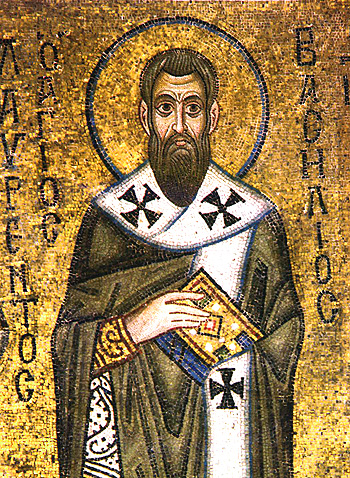 St. Basil the Great, a revered early Christian theologian and monastic leader, left a profound legacy that extends to the realm of education, offering timeless wisdom for Christian parents seeking to nurture their children's intellectual and spiritual growth.
- Details
- Written by: Thomas Cloycesen
- Category: Church Life
- Hits: 4038
Read more: St. Basil the Great: Nurturing Faith and Knowledge in Education
- St. John Chrysostom's Timeless Wisdom: Nurturing Faith and Virtue in Children's Education
- St. Augustine's Educational Odyssey: Nurturing Faith and Intellect in Children
- The Early Church Fathers on Educating Children in Relation to Public Schools and Private Tutoring
- Alternative Operating Systems: Looking for Systems that better align with Traditional Christendom